


Claude Monet: Key Works, Style, and Print Buying Tips
TL;DR
- Claude Monet (1840-1926) helped shape French Impressionism and painted outdoors to capture changing light.
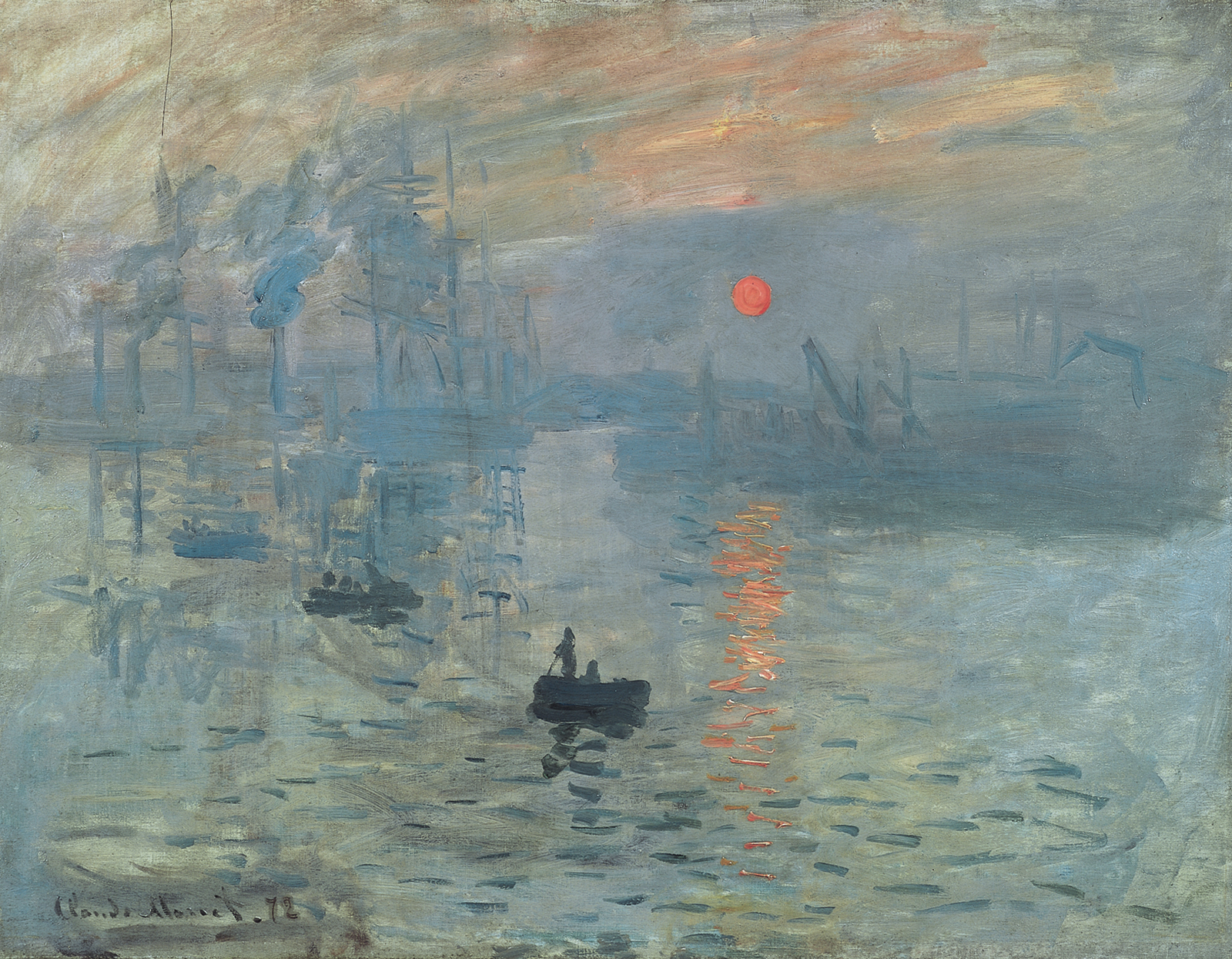
- His painting “Impression, Sunrise” is linked to how the movement got its name.
- Key series to know: Water Lilies, Haystacks, Rouen Cathedral, and views of the Seine and Paris.
- For prints, match the palette to your room, pick the right size, and keep the frame simple.
- Shop Monet-inspired prints and gifts in our Claude Monet collection.
Overview
Claude Monet (1840-1926) was a French painter closely associated with Impressionism. He is known for painting scenes outdoors and studying how light and atmosphere change across minutes and seasons. Museums and reference works highlight his role in developing the movement and his long career built around series painting.

Many introductions to Impressionism connect the movement’s name to Monet’s painting “Impression, Sunrise” (1872). Over time, Monet pushed further into repeated studies of the same subject, changing the time of day, weather, and viewpoint.
Key works and series
- Water Lilies - paintings inspired by the water garden at Giverny, often focused on reflections and surface color.
- Haystacks - repeated views of stacked grain, used to study seasonal light and color shifts.
- Rouen Cathedral - the same facade painted under different light conditions.
- Seine and Paris views - riverscapes and city scenes with haze, smoke, and moving weather.

Which Monet series should you choose?
Different Monet series create different moods. Choose based on how you want the room to feel, not only on fame.
- Water Lilies: calm and quiet. Best for bedrooms, lounges, and wellness spaces.
- Haystacks: warm and energetic. Works well in dining rooms and spaces with wood tones.
- Rouen Cathedral: structured and architectural. Suits offices and classic interiors.
- Seine and Paris scenes: lively but balanced. Good for entryways and living rooms.
If you are unsure, start with one larger piece rather than several small ones. Monet benefits from space around the artwork.
Style and techniques
Monet is often described through three practical ideas: paint what you see in the moment, simplify detail, and let color carry the mood. Short brushwork helps suggest movement in water, clouds, and foliage. His palette changes by period, from cooler early landscapes to richer late works.
Print and display tips
- Pick the right palette: Water Lilies suits calm rooms, while Haystacks adds warm yellows and oranges.
- Choose a frame that fits the style: thin black or natural wood for modern interiors, wider classic frames for traditional rooms.
- Control reflections: avoid direct spotlights and use glare-free glass if the wall faces a window.
How Monet works in real interiors
Monet prints behave differently in a room compared to graphic or abstract art. They react to daylight, wall color, and viewing distance. If you pick a Monet you love, you will notice new details over time as the light changes.
- Bright rooms with natural light: Monet works best where daylight shifts during the day. Subtle color changes show up in the morning and late afternoon.
- Neutral walls: soft white, warm gray, or light beige keeps Monet calm. Strong wall colors can overpower the artwork.
- Viewing distance: Monet’s brushwork blends at distance. Larger prints look better when you can step back 2–3 meters.
If your room feels flat, Monet often adds depth without visual noise. This is why Water Lilies and Seine scenes work well in living rooms and bedrooms.
Common mistakes when buying Monet prints
- Choosing a size that is too small: Monet needs scale. Small prints often lose the brushwork effect.
- Overdecorating the wall: avoid mixing Monet with busy shelves or many nearby frames.
- Cold lighting: very white or blue LED light can flatten Monet’s colors.
- Overly ornate frames: heavy frames can compete with the painting instead of supporting it.
A simple setup usually shows Monet at his best.
Shop
Browse our Claude Monet Artist Collection for premium art prints, framed artwork, and curated gifts inspired by Monet’s paintings. If you want a broader Impressionist mix, explore our Impressionism Collection.
FAQ
- Who was Claude Monet?
- He was a French painter (1840-1926) strongly linked to Impressionism and known for studying natural light in landscapes and gardens.
- Why is “Impression, Sunrise” important?
- It is often cited in museum and reference sources when explaining how the term “Impressionism” entered public use.
- What are Monet’s best-known series?
- Water Lilies, Haystacks, and Rouen Cathedral are among the most widely discussed series.
- What size Monet print should I buy?
- Match the print to the wall and the furniture below it. For a single piece above a sofa, many decorators aim for the artwork to span roughly two thirds of the sofa width.
- How should I frame a Monet print?
- Use a simple frame when the artwork has strong color. Add a mat when you want more breathing room around the image.
- Where can I buy Monet-inspired art?
- You can shop in our Claude Monet collection, and also browse Impressionism for related artists.
Author’s take (Samo Polegek)
I like Monet prints most in calm rooms where light changes during the day. His color shifts reward you when the sun moves. For a modern space, I pick Water Lilies in a wide format and keep the frame thin and simple. For classic interiors, I go for Rouen Cathedral or Haystacks with a warmer mat.
If you want one strong piece, choose a larger size and hang it at eye level, with the center of the frame around 145 to 150 cm from the floor. If you build a set, keep equal spacing and treat the group as one artwork. Use glare-free glass if the wall faces a window.
I often see customers hesitate between two Monet works. My advice is simple: choose the one you would enjoy seeing every day, not the one you think you “should” own. Monet rewards long-term viewing. The more time you spend with it, the more it gives back.
If you are buying your first Monet print, go larger than you think. It almost always looks better once it is on the wall.
Start with our Claude Monet collection. If you want a broader mix, browse Impressionism and compare palettes before you buy.
Sources
- The Metropolitan Museum of Art: Claude Monet (1840-1926)
- Tate: Claude Monet
- Encyclopaedia Britannica: Claude Monet
- Wikimedia Commons: Claude Monet (1899), photo by Nadar (Public domain)
- Wikimedia Commons: Impression, Sunrise (Public domain)
- Wikimedia Commons: Water lilies (1920-1926) (Public domain)


%20helped%20shape%20French%20Impressionism%20and%20painted%20outdoors%20to%20capture%20changing%20light.%0A%20%20His%20painting%20%E2%80%9CImpression,%20Sunrise%E2%80%9D%20is%20linked%20to%20how%20the%20movement%20got%20its%20name.%0A...)